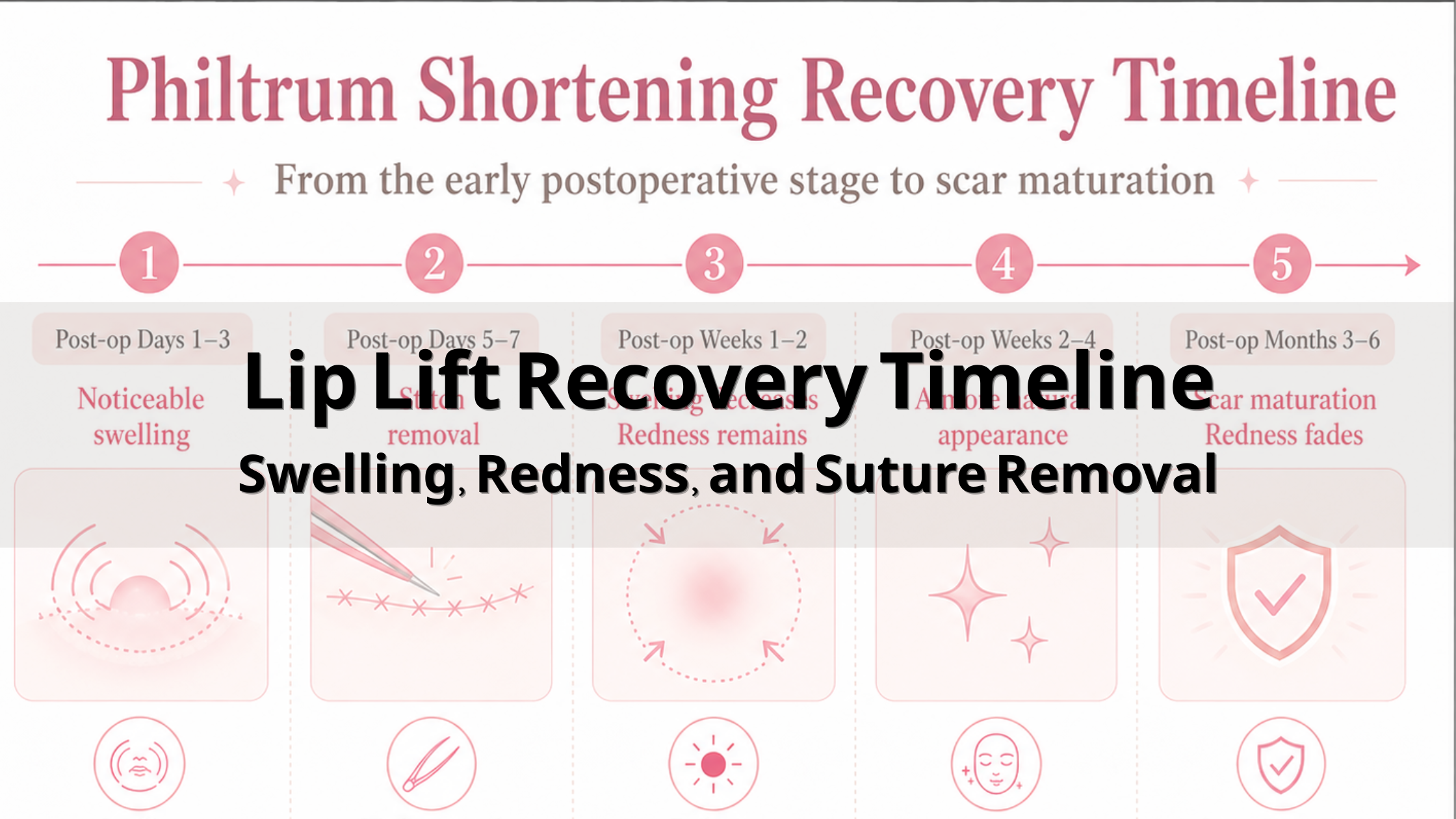
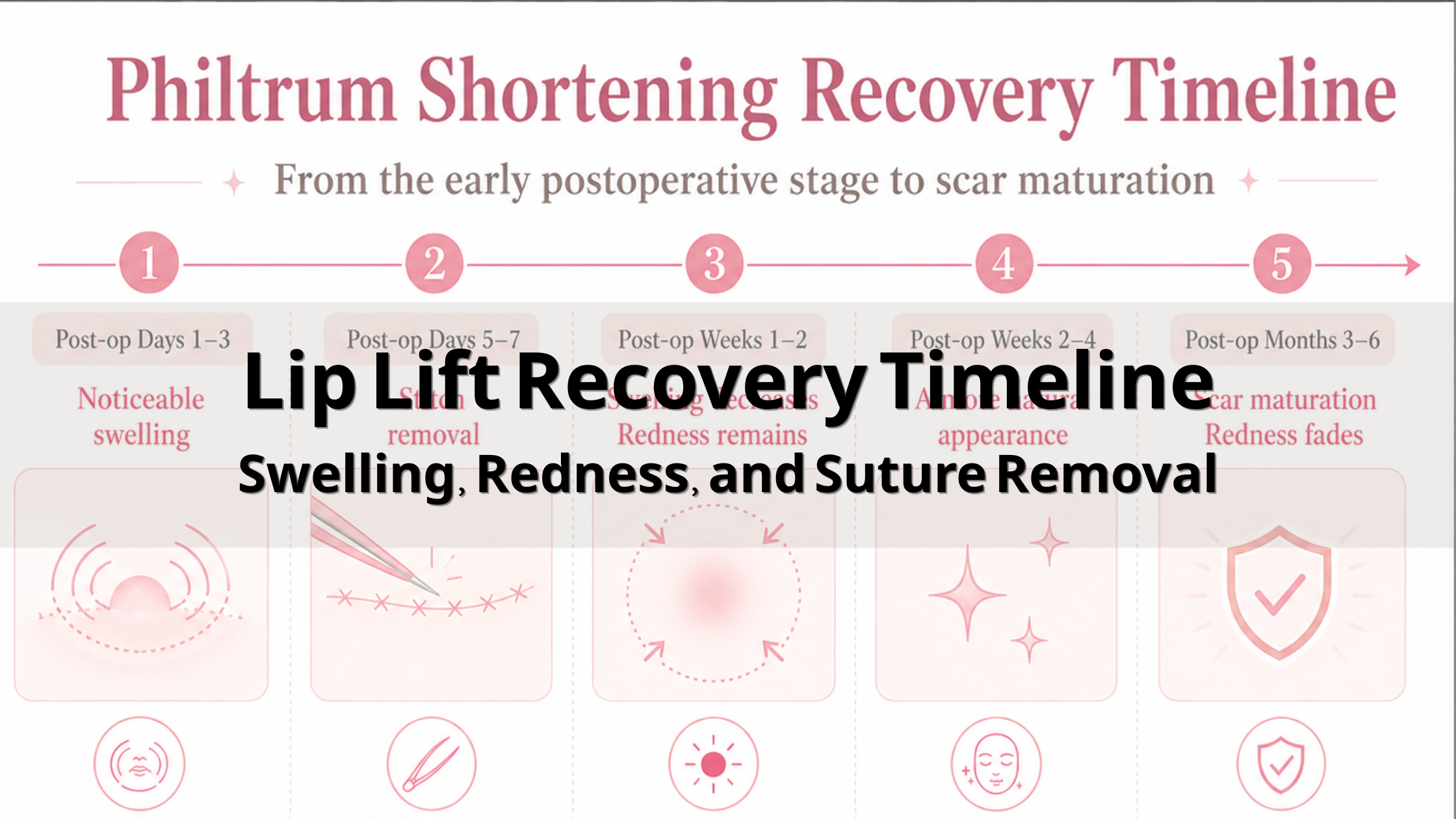
The lip lift incision sits directly under the nose, a spot affected by every daily action you take: eating, washing your face, talking, and making expressions. That is exactly why how you spend the recovery period shapes both how the wound heals and how the final result looks. This guide organizes post-op life behavior by behavior, from wound care basics to eating, face washing, makeup, expressions, exercise, and alcohol, with the general timing for resuming each and the specific points to watch. The timings here are general guidelines only; instructions vary with the surgery and your recovery, so always follow your surgeon's directions first.
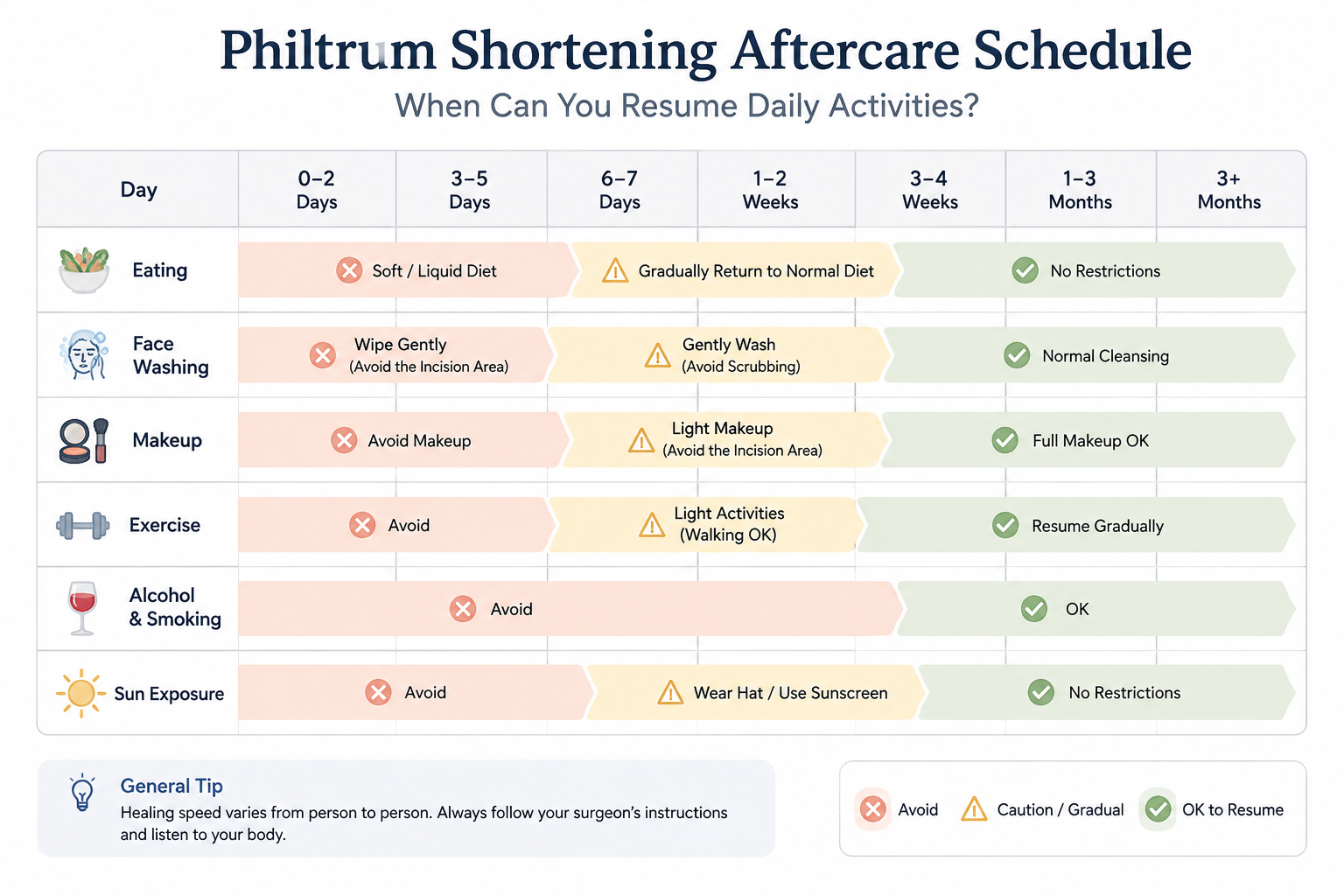
The Short Answer: When to Resume Each Activity
The sections below cover each behavior in detail.
Wound Care Basics: The Foundation of Everything Else
Before the behavior-by-behavior guide, start with the foundation: wound care. It comes down to three things: keep it clean, keep it protected, and keep your hands off. Use any prescribed ointment and medication exactly as directed, and apply ointment with a clean cotton swab rather than your fingers. Scabs that form on the wound are part of healing, so never pick them off. If you have an unconscious habit of touching or scratching under your nose, this is the period to consciously keep your hands away. And if the wound ever looks or feels different from usual, don't self-diagnose; contact your clinic.
Eating: When, and What to Watch
Eating is generally possible from the day of surgery, but for a while you need to watch both what you eat and how you eat it.
There are four points. First, so you can eat without opening wide, cut food into bite-sized pieces or choose soft menus (porridge, soups, noodles). Eating styles that require a wide-open mouth, like burgers or biting into a whole apple, put tension on the suture line and should be avoided for about two weeks. Second, let hot food cool before eating. Third, go easy on spicy and salty foods, which irritate the wound and contribute to swelling and puffiness. Fourth, keep the area around your mouth clean after meals so food debris and seasoning don't linger near the wound; when wiping, press gently rather than rubbing.
Face Washing and Skincare: When to Start
Face washing is generally fine from the next day, as long as you avoid the wound. The rule is simple: until the sutures are removed, do not wet or rub the wound. Wash areas away from the incision (eyes, cheeks) normally, and limit the area under the nose to gentle dabbing with a damp cotton pad. To keep cleanser and water from running into the wound, wipe-off cleansers and a warm towel can be more practical than bending over a sink.
Skincare follows the same logic: apply toner and lotion around, not on, the incision line. Once the sutures are out and the wound has visibly closed, you can return to your normal routine, but continue to avoid strong friction on the scar area (wiping motions, massage) for a while.
Makeup: When to Start
Makeup on areas other than the wound (eyes, cheeks, brows) is generally fine from the next day. Makeup over the incision line itself, such as concealer or foundation to hide the wound, is a different matter: applied before the wound closes, it can cause infection or pigmentation, so wait until the sutures are out and the wound has sealed.
Even after you resume, removing makeup from the scar area is the point to watch. Scrubbing with cleanser strains a healing wound, so remove makeup gently with a low-irritant cleanser and make sure nothing is left behind. For lip makeup, it is safest to wait until you can apply it without stretching your mouth wide.
Expressions and Mouth Movement: The Lip Lift Specific Rules
What makes lip lift aftercare distinctive is the role of expressions and mouth movement. The incision sits where every mouth movement pulls on it, so for about two weeks after surgery, keep big laughs, big yawns, and wide-open-mouth movements as restrained as you can. When a yawn is coming, lightly supporting your chin with your hand helps prevent opening too far.
Normal conversation is fine, but if possible, schedule long talking sessions or situations requiring big expressions (photo shoots, customer-facing work) for after suture removal. Also, since the nose sits directly above the incision, blowing your nose hard transmits force to the suture line. Blow one nostril at a time, gently.
Exercise, Alcohol, and Smoking: When to Resume
Exercise directly affects circulation and blood pressure, so resume it in stages. Light walks are fine after a few days, depending on how you feel; cardio such as jogging after about two weeks; and weight training or intense sports after about two to four weeks. If swelling or pain worsens after resuming, step back a stage and watch.
Alcohol boosts circulation and raises the risk of swelling and bleeding, so avoid it for at least one to two weeks, and never combine it with prescribed medication. Smoking impairs blood flow, delays wound healing, and affects how the scar under the nose matures. Rather than counting down to a fixed release date, avoid it for as long as you possibly can.
Other Daily-Life Notes
For sleep, keeping your head elevated above heart level with a higher pillow for about the first week helps reduce swelling; avoid sleeping face-down, which presses on the wound. A mask is convenient for covering the wound when going out, but choose a roomy fit that will not rub the incision, take care not to snag the wound when putting it on and off, and remove it periodically so the wound does not sit in trapped moisture. Activities that strongly heat the body, such as saunas, hot-stone spas, and long baths, prolong swelling and are best avoided for about a month.
Behaviors to Avoid: The Full List
To close, here are the behaviors that most commonly interfere with recovery: touching the wound or picking scabs; wide-mouth eating, big laughs, and big yawns; wetting or rubbing the wound while washing; makeup on the incision before it closes; early intense exercise and alcohol; smoking; and blowing your nose hard. Each one leads to strain on the suture line, infection, or a more visible scar. Precisely because the area under the nose moves every single day, spend this period with one motto: don't over-move, don't touch, don't rub.
Frequently Asked Questions
Q1. When can I brush my teeth, and how?
A. Tooth brushing is generally fine from the day of surgery. The points are to open your mouth narrowly and to keep the handle and head of the brush away from the wound under your nose; a small-headed toothbrush makes this easier. When rinsing, don't swish hard; hold a little water gently and let it out quietly.
Q2. Are sneezing and nose blowing okay?
A. You don't need to suppress sneezes, but opening your mouth slightly as one comes lets the pressure escape and reduces strain on the suture line. When blowing your nose, do one nostril at a time, gently, rather than both at once with force. If you are scheduling surgery during a season when you blow your nose often, such as allergy season, discuss it with your surgeon in advance.
Q3. Should I wear a mask?
A. A mask is handy outdoors for shielding the wound from eyes and dust, but it is not mandatory. If you wear one, choose a roomy size that will not rub the incision, and be aware that long stretches of trapped humidity keep the wound damp, so take it off periodically to let the area dry. Take care not to catch the wire or edges on the wound when putting it on and off.
Conclusion: Don't Over-Move, Don't Touch, Don't Rub
Post-lip-lift life boils down to three rules: don't over-move (wide mouth, big laughs, big yawns), don't touch (the wound, the scabs), and don't rub (washing, makeup removal). Eat from day one with care about the menu, wash and do makeup from the next day while avoiding the wound, save makeup over the incision for after suture removal, and bring back exercise and alcohol in stages. All timings are guidelines; the real decisions depend on the state of your wound, so when in doubt, check with your surgeon rather than judging on your own, and put recovery first.
If you have questions about your post-op routine, feel free to reach out through Respect Plastic Surgery's official WhatsApp for an online consultation.
 Google Maps