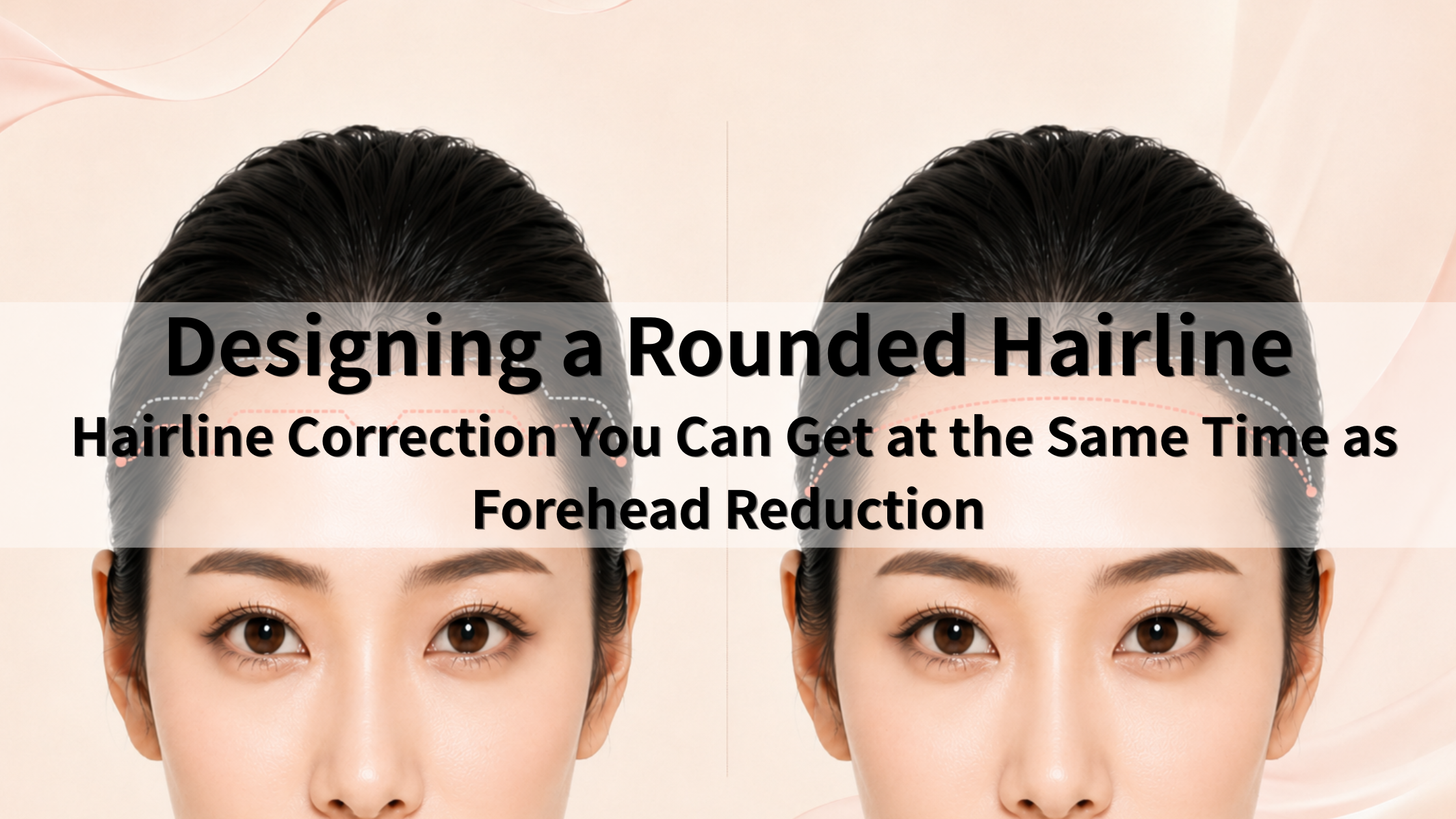
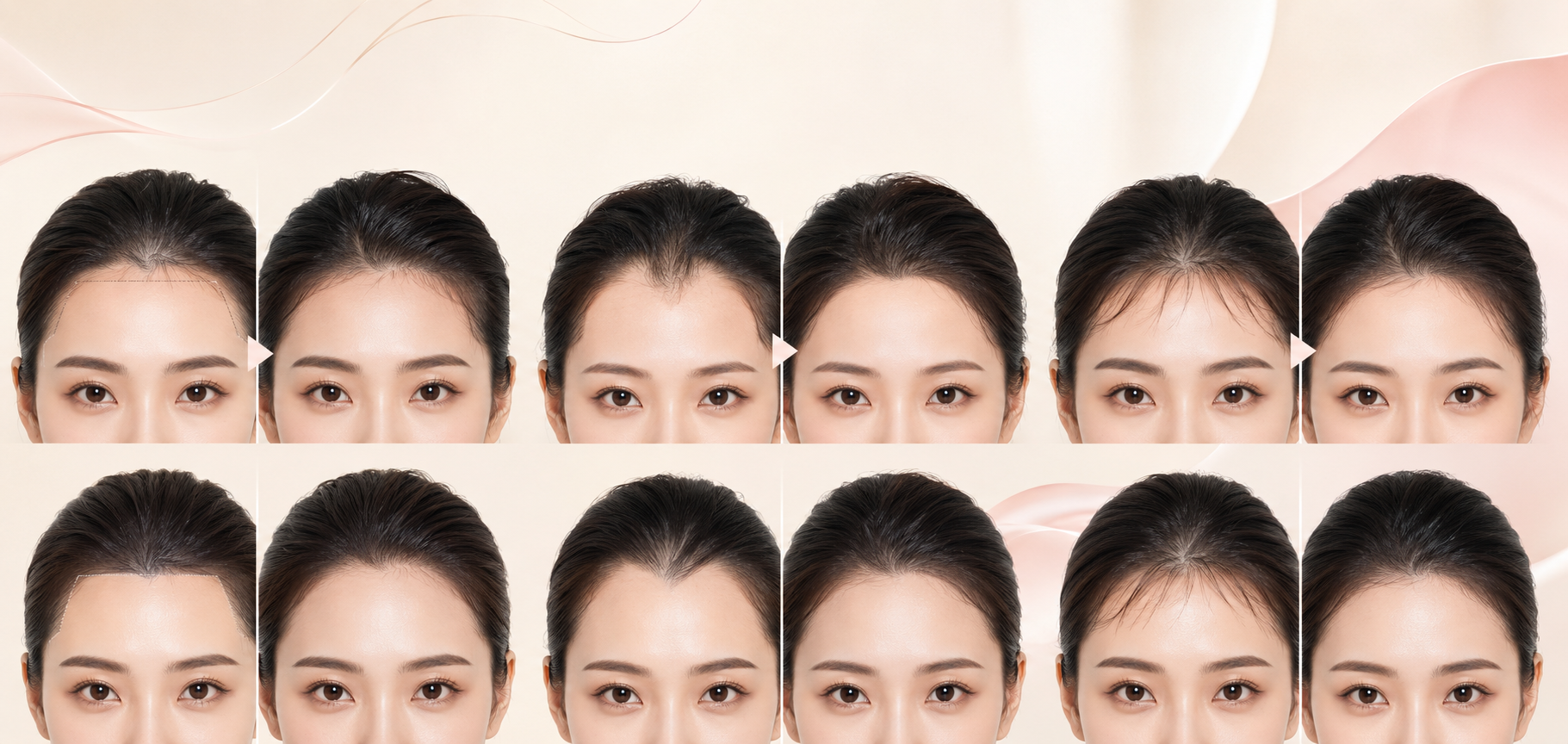
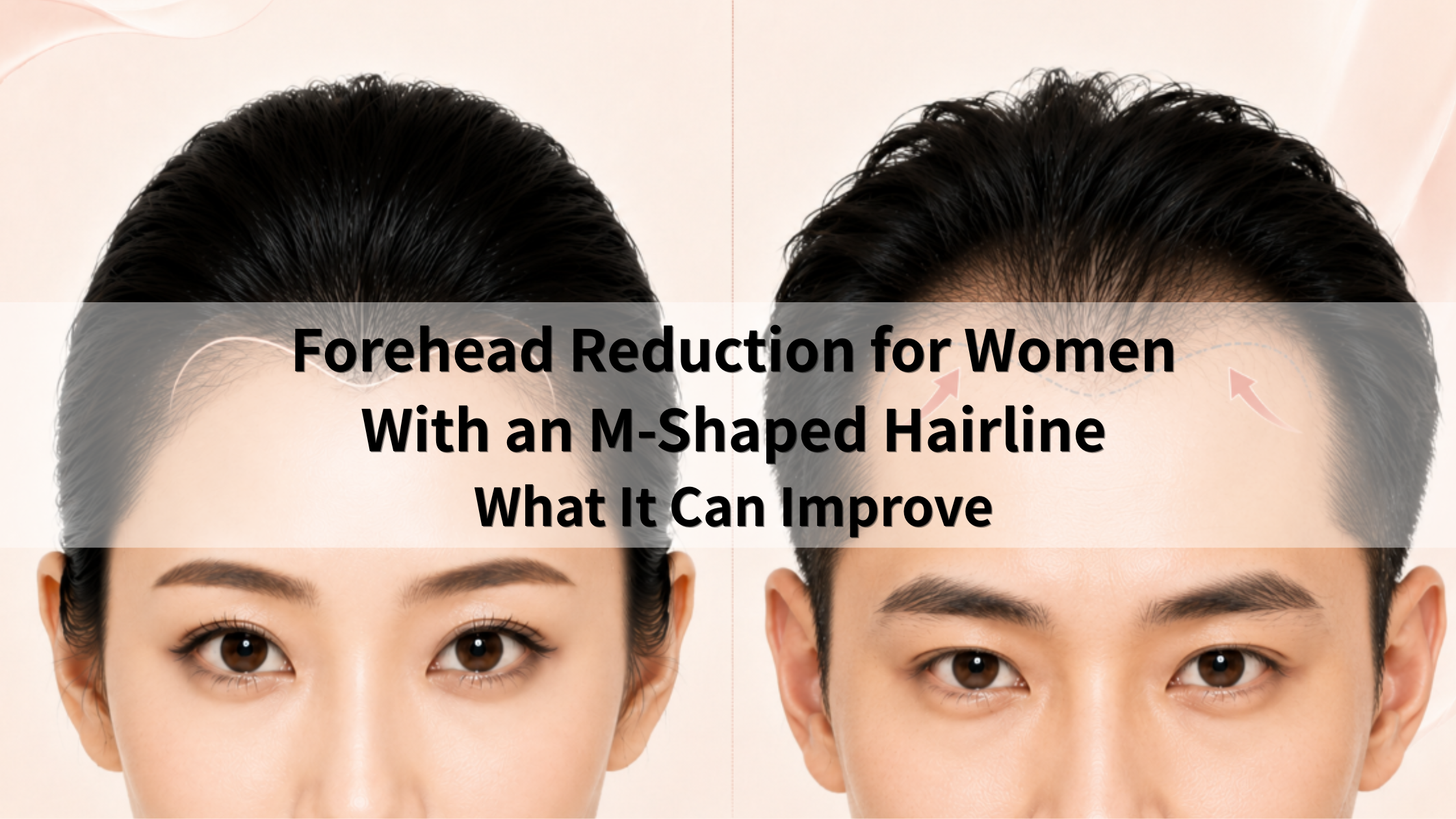
When it comes to forehead concerns, "width" tends to get the attention—but what actually comes up most often in consultations are concerns about shape. The hairline is squared and angular, cuts inward in an M shape, or runs jagged and irregular. Even when the area itself is not that large, an irregular shape alone can make the forehead look wide and give a hard impression.
To state the conclusion first: the impression a hairline makes is determined by its "shape" just as much as its "position." And because forehead reduction is a procedure in which the incision line itself becomes the new hairline, it has a distinctive property: the line's shape can be redesigned at the same time the position is lowered. This article breaks down the elements that make up a natural, rounded hairline, explains how hairline correction can be done at the same time as forehead reduction, and walks through a design process that works backward from the shape concern.
The Conclusion First: A Quick Reference for Hairline "Shape" Concerns and Approaches
What they all share is that the solution is not "lowering" but "redrawing the shape." Let's look at each in turn.
The Impression of a Hairline Can Be Determined by "Shape" More Than "Position"
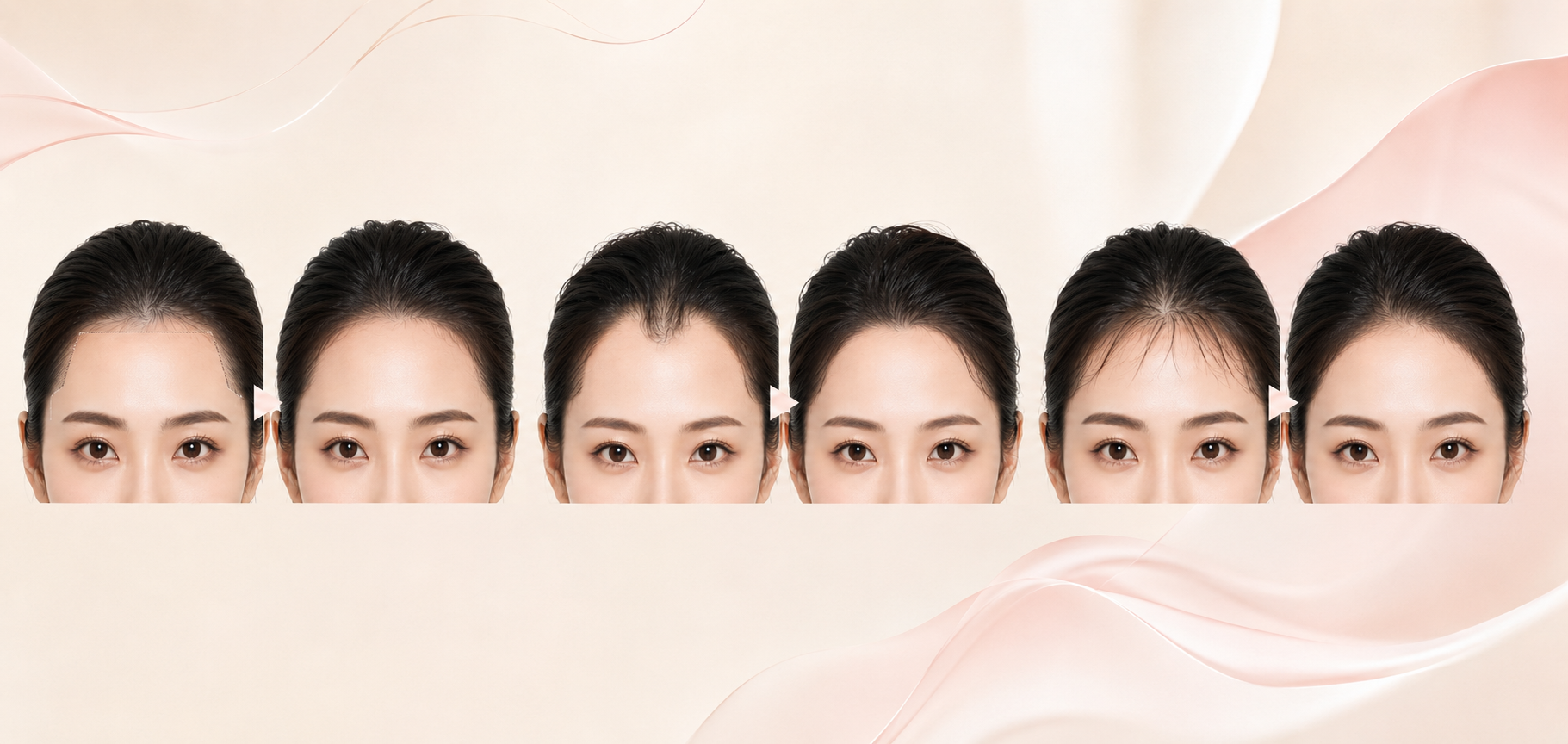
Even at the same hairline height, an angular line and a rounded arch create very different facial impressions. An angular line emphasizes the four corners of the forehead, making the outline look straight-edged and masculine. M-shaped notches widen the temple-side area and make the forehead look vertically long. A jagged line draws the eye to the border itself, producing an "untidy impression" separate from the forehead's actual size.
In other words, within the concern "my forehead bothers me," there is a mix of two types: the type that lowering the position will solve, and the type that cannot be solved without redrawing the shape. Sorting out which yours is (or whether it is both) is the starting point of design. Measure the position using the facial one-third ratio (the ideal guideline is upper 0.9–1 : middle 1 : lower 0.8–0.9, per the official site), while observing the shape of the line in a front-facing photo.
The Five Elements of a Rounded Hairline
"Round" alone is not enough. A hairline that reads as natural and beautiful is made up of the following five elements.
① A gentle arched curve. A line that draws a soft arc from the center of the forehead toward the temples. Sharp curves or straight segments look artificial. ② Fine irregularity. A natural hairline is not perfectly smooth; it carries subtle unevenness. A line that is too tidy—as if drawn with a ruler—actually becomes the source of a "manufactured" look. ③ A baby-hair gradient. The border should not start abruptly with thick hairs, but transition gradually from fine, soft hairs. This transition zone determines the softness of the hairline. ④ Harmony with the face shape and the curve of the forehead. Round, elongated, and egg-shaped faces each harmonize with a different arch depth. The design also needs to account for compatibility with the curvature of the forehead bone. ⑤ Left–right balance. Not perfect symmetry, but a balance that looks natural within the whole face. The original hair flow and the position of the crown (whorl) are also taken into account.
The quality of the design is determined by how thoroughly these five elements are built in.
Hairline Correction at the Same Time as Forehead Reduction | The Incision Line = A Design Opportunity
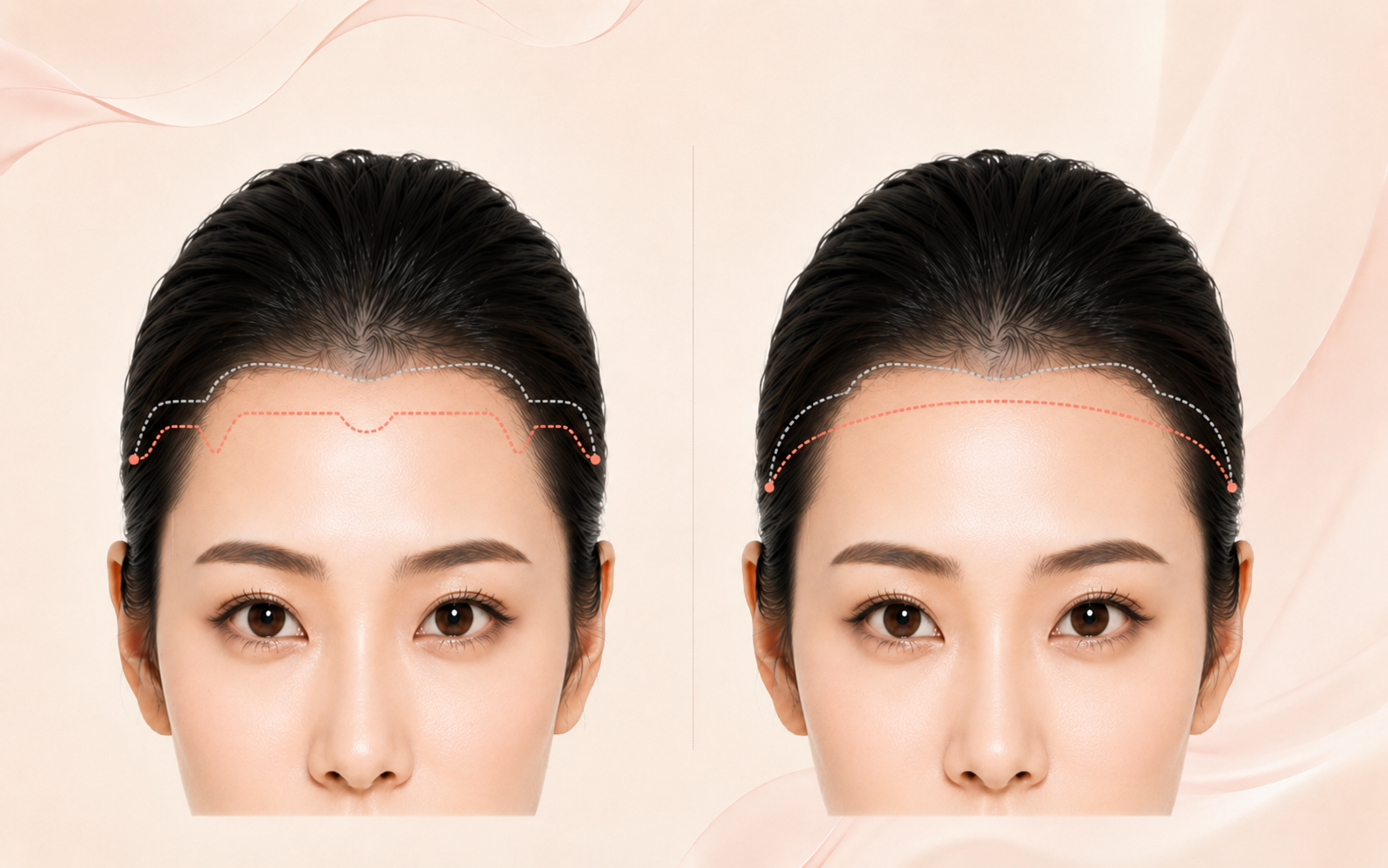
This is the heart of this article. Forehead reduction is a procedure that removes skin along the hairline, and the suture line itself becomes the new hairline. In other words, how the incision line is drawn is, in itself, the design of the new hairline's shape.
Making use of this property, the shape can be corrected at the same time the position is lowered. Angular corners become a rounded arch by drawing the incision line in a curve. M-shaped notches are eased by a design that varies the amount of lowering by region. A jagged line can be tidied by redrawing it as a new line. Conversely, a design that merely shifts the original line down in parallel will lower the position but leave the shape concern exactly as it was. Whether the consultation discusses not only "how many centimeters to lower" but also "what shape the line should take" is a way to tell the quality of a forehead reduction consultation.
Along the new line, hair grows through the scar thanks to the beveled incision that preserves the hair follicles, and the border blends in naturally over time (per the official site). For reproducing a delicate baby-hair-level gradient, or for filling deep M-shaped notches with hair, a design that combines hairline hair transplantation may also be considered.
Width Is Normal, Only the Shape Bothers You | Design for This Type
You measure the ratios and your forehead width is within the guideline range—but the shape of the line is what bothers you. For this type, a large lowering is not necessary. What is considered instead is a design that keeps the lowering to a minimum and makes redrawing the line's shape the main objective. Simply rounding the corners and tidying the irregularities can change the impression of the forehead considerably.
Also, for those who want to avoid an incision, or whose concern is partial—such as M-shaped notches—line correction through hair transplantation can be an option on its own. Shape concerns are not a "surgery-first" domain; the means can be chosen to match the extent and depth of the concern. That is exactly why putting into words which part of your line bothers you, and how, and bringing that to the consultation is the shortcut to the optimal design.
The Flow Until the Design Is Decided
Design during consultation generally proceeds as follows. First, the face shape, one-third ratios, curvature of the forehead bone, hair flow, and the state of the baby hairs are evaluated in an examination. Next, the concern (width, shape, or both) and the desired impression (round and soft, natural and subtle, and so on) are aligned. On that basis, the target line is actually drawn and confirmed, and the amount of lowering, the curve, the treatment of the corners, and the handling of baby hairs are decided.
At this stage, whether you can confirm the target line with your own eyes—on a mirror or a photo—is important. Not just a verbal "we'll make it natural," but a design you can see as a line and agree with. Share the image down to how it will look with your bangs up, and only then proceed to surgery.
Frequently Asked Questions (FAQ)
Q1. The width of my forehead doesn't bother me—can just the shape be corrected? A. Possibly. There are options such as a design that minimizes the lowering and makes correcting the line's shape the main objective, or—if the concern is partial, such as M-shaped notches—line correction through hair transplantation. Which means is appropriate depends on the state of the line and the extent of the concern, so please discuss it while examining the line in a consultation.
Q2. Can a masculine, angular hairline be made into a rounded, feminine line? A. A design that rounds the corners and brings the line closer to an arch is one of the classic themes of hairline correction. However, the degree of roundness is determined by harmony with the face shape and hair flow, and making it too round can tip the impression toward looking childlike. It is important to share the impression you want—with photos, for example—and have an arch depth designed that suits your face.
Q3. Can the nuance of fine, baby-hair-like strands be reproduced? A. Along the new hairline, hair grows through the scar thanks to the beveled incision that preserves the hair follicles, and the border blends in naturally over time (per the official site). Beyond that, if you want to further build in a delicate baby-hair-level gradient, a design that combines hairline hair transplantation may also be considered. Since the means change depending on how much delicacy you are after, please convey the image you have in mind concretely during the consultation.
Summary | Not "Lowering" but "Redrawing"
Hairline concerns such as squared, M-shaped, or jagged lines are a problem of shape, separate from forehead width. And precisely because the incision line itself becomes the new hairline, forehead reduction is a procedure in which the line can be redrawn at the same time the position is changed. A rounded hairline is determined by building in five elements: the arched curve, fine irregularity, the baby-hair gradient, harmony with the face shape, and left–right balance. Choose your consultation on the basis of whether it goes beyond "how many centimeters to lower" and designs "what shape of line to draw."
If you would like to know the shape of your own hairline and the direction its design could take, please use the online consultation via RESPEC Plastic Surgery's official WhatsApp.

 Google Maps