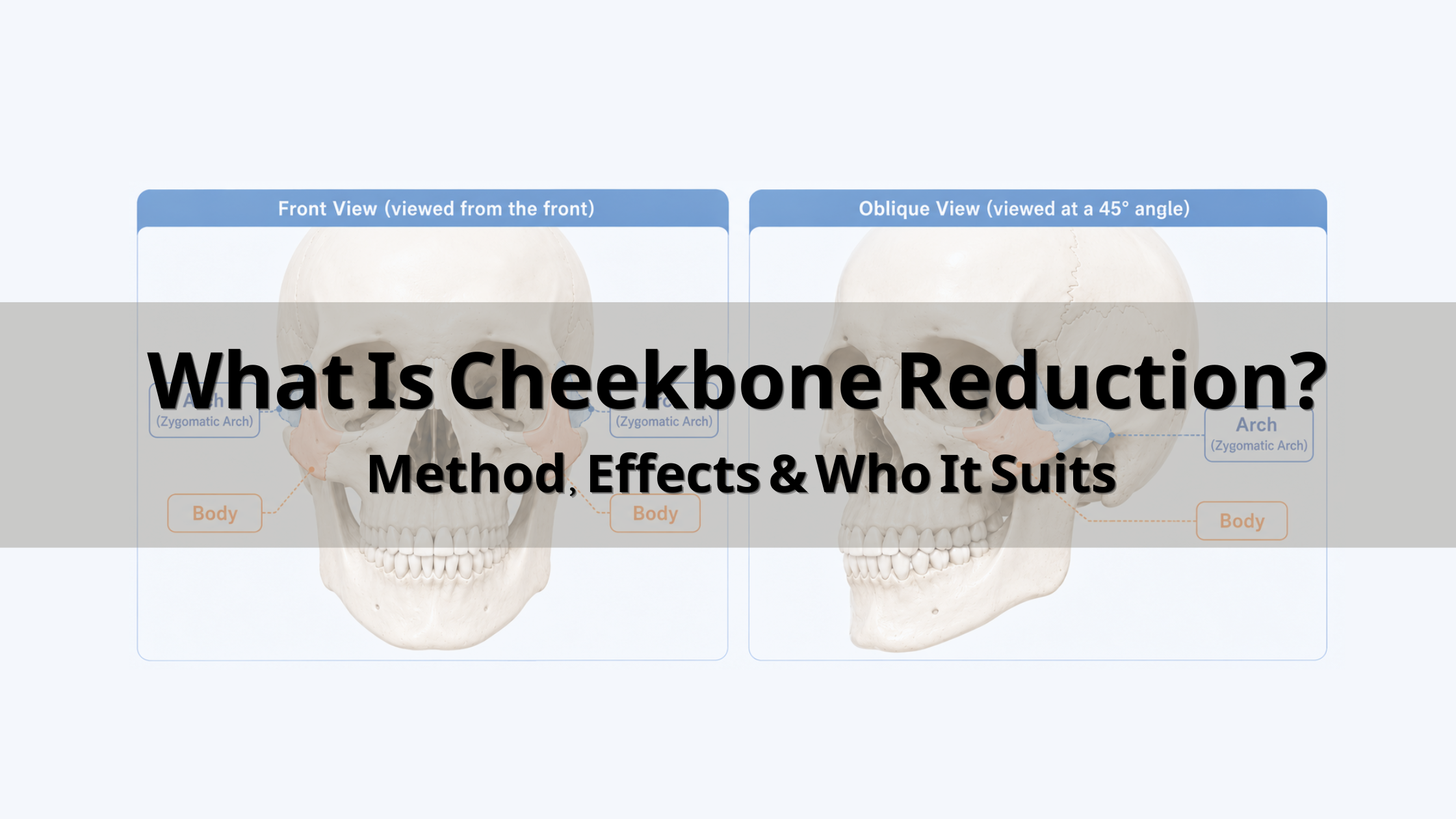
"Seen from the front, my face looks wide." "From an oblique or side angle, the cheekbone's projection stands out." "I don't look as slim as I really am, and people say I look harsh." In many cases, the cause of these concerns is the cheekbone's bone structure itself.
Cheekbone reduction is a contouring surgery that cuts the protruding cheekbone, moves it inward and backward, and fixes it in place to fundamentally refine facial width and three-dimensional projection. Unlike cases caused by fat or sagging, "face size" caused by bone structure cannot be changed by massage or weight loss, so a surgery that works directly on the bone is the fundamental solution.
This article explains how cheekbone reduction works, its methods and effects, and who it suits.
What Cheekbone Reduction Is — Which Bone Is Reshaped
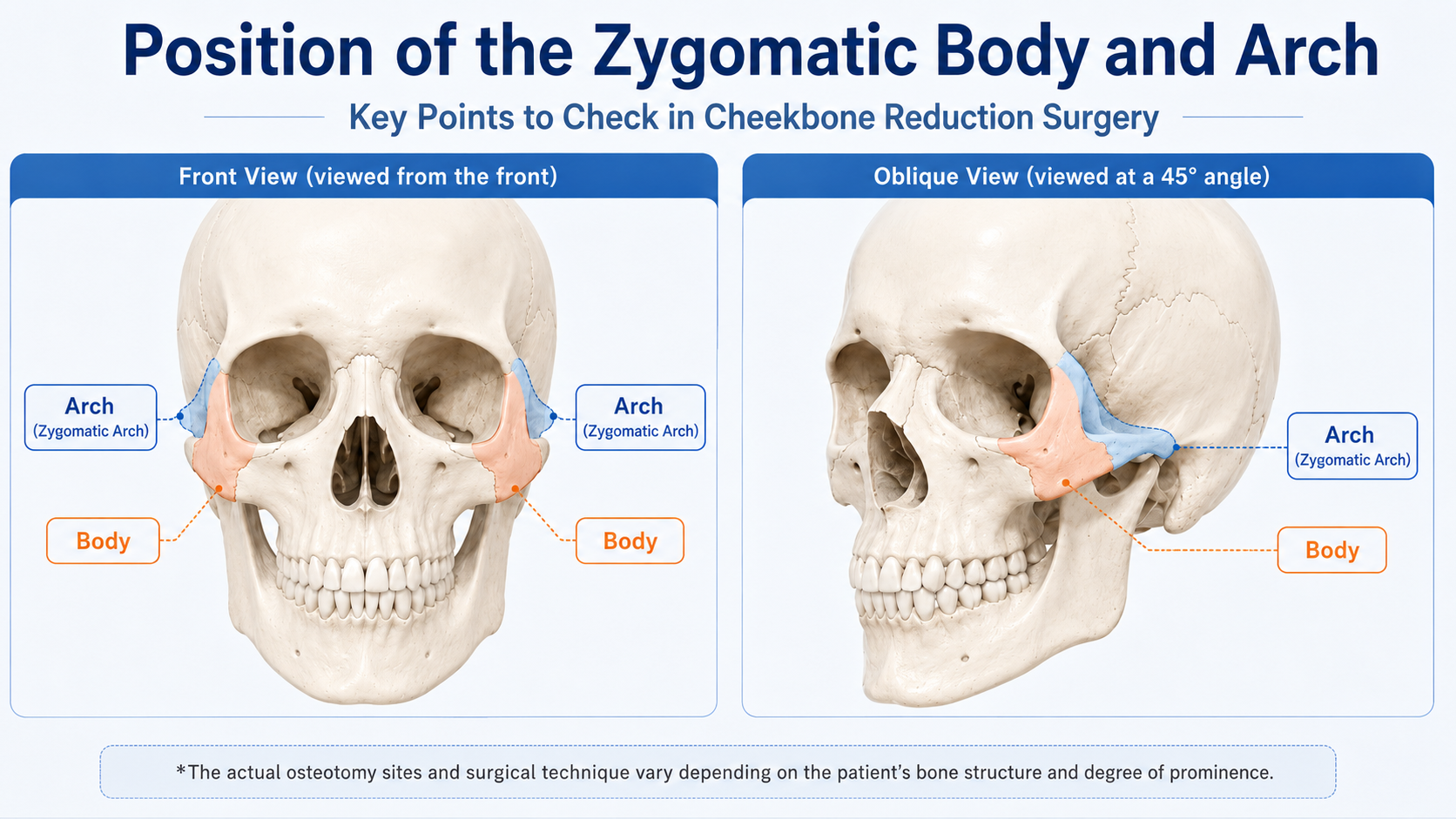
The cheekbone consists of the body, which projects at the front of the face, and the arch (zygomatic arch), which extends from there toward the ear. The arch determines the facial width seen from the front, while the body determines the projection seen from a 45° angle.
Cheekbone reduction cuts both the body and the arch and moves them inward. Moving only one of them can cause a step or an unnatural look, so designing the body and arch as a single unit is a condition for a natural result.
How Cheekbone Reduction Works — L-Shaped Osteotomy and Fixation
Although it is sometimes called "cheekbone shaving," the actual surgery is not merely shaving the surface but centers on "osteotomy + fixation"—cutting the bone and moving it. Shaving alone allows only a limited amount of change; meaningful improvement requires an osteotomy.
A typical surgical flow is as follows.
3D CT analysis and design: bone thickness, nerve position, and asymmetry are analyzed in three dimensions, and the amount of movement is designed in millimeters
Incision: access is through small incisions inside the mouth and near the sideburn (no visible scar remains on the skin surface)
Osteotomy: the body is cut in an L-shape, and the rear of the arch is also cut
Movement and fixation: the bone is moved to the designed position and firmly fixed with pins and plates
Suturing and recovery: surgery takes about 1 to 1.5 hours and is performed under general anesthesia
Whether the main concern is front width or the 45° projection changes the osteotomy design. For the approach by type, see "The Difference Between Front and 45° Cheekbones."
Endoscopic Cheekbone Reduction as an Option
In recent years, endoscopic cheekbone reduction—performing the osteotomy while checking the surgical field directly with an endoscopic camera—has also become an option. It reduces blind maneuvers, limits the risk of nerve damage, and allows a more precise osteotomy.
Effects of Cheekbone Reduction
The changes you can expect from cheekbone reduction are mainly the following three.
A narrower front-facing width: as the arch moves inward, the outline seen from the front looks cleaner
The 45° projection settles: the "rugged" feel at an oblique angle is eased, for a smoother outline
A change in impression: the "harsh" or "tired-looking" impression from cheekbone prominence is softened for a gentler look
Who It Suits and Who Should Be Cautious
Good candidates
People whose cheekbone projection is caused by bone structure (you can confirm this with the self-check)
<People who want to fundamentally improve front facial width or the sense of 45° projection
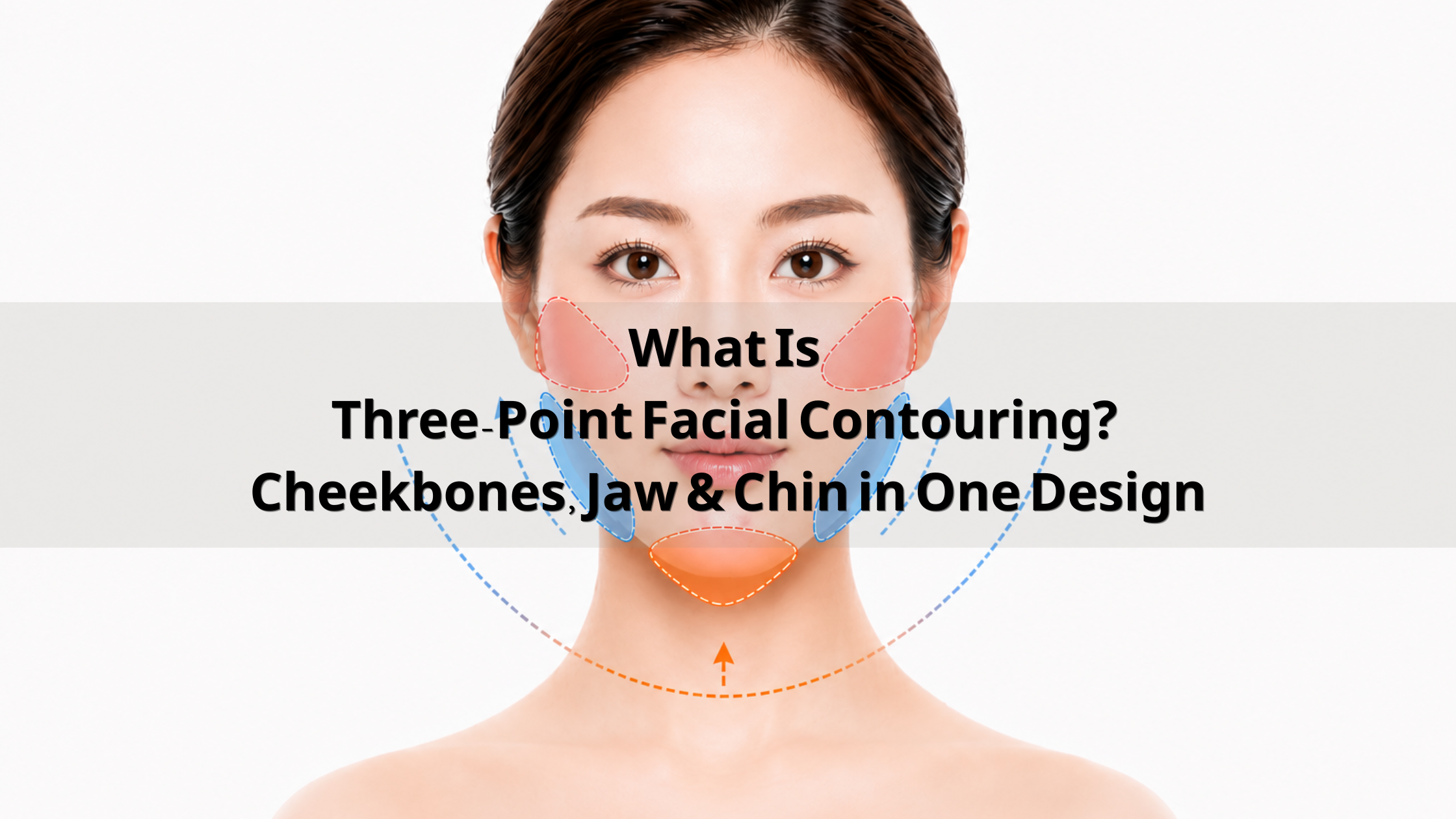
People who want to balance the whole outline together with the jaw and chin
Those who need careful assessment
People whose projection is mainly caused by fat or sagging (moving the bone will not solve the concern)
People who already have significant skin sagging (the amount of movement or a combined lift needs consideration)
People still in a growth phase whose bone structure is not yet set
Downtime
There is individual variation, but a typical course is a swelling peak at 2–3 days, with major swelling settling in about 2 weeks.
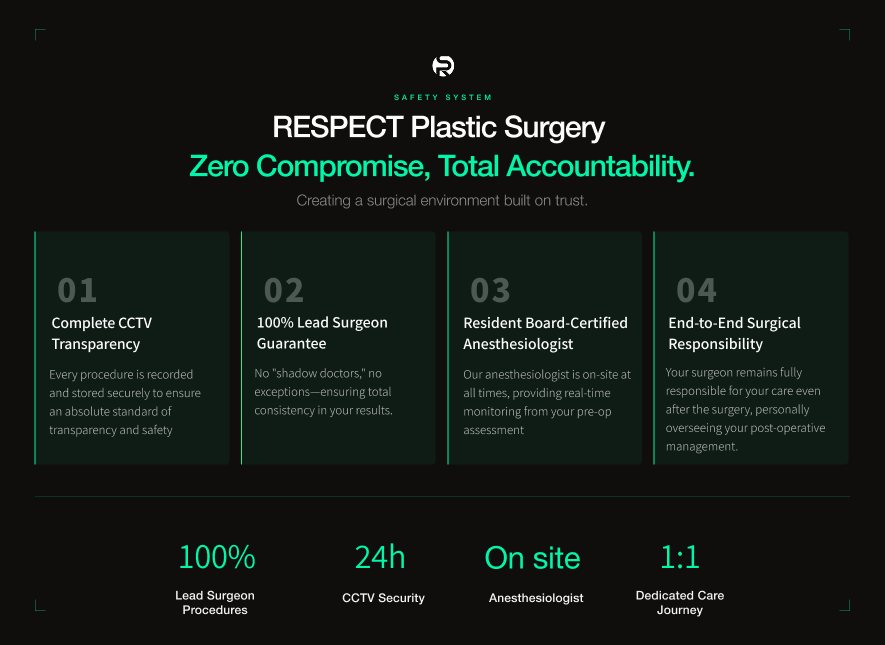
Respect's Safety System
Precisely because this is an osteotomy under general anesthesia, Respect Plastic Surgery has in place not only surgical skill but also "a system prepared for the unexpected."
✅ Anesthesia management and intraoperative monitoring by a board-certified anesthesiologist
✅ Emergency-response equipment, backup power, and other emergency systems
Frequently Asked Questions (FAQ)
Q. Does cheekbone reduction require hospitalization? A. At our clinic, hospitalization is not required. After surgery you can go home (return to your accommodation) following observation; for visits from overseas, we will arrange a schedule that includes suture removal and follow-up.
Q. Will a scar remain on my face? A. Because the incisions are inside the mouth and near the sideburn, no scar remains in a position visible from the front.
Q. I heard that reducing the cheekbones makes you look older—is that true? A. If the "design of the movement amount" and the "handling of soft tissue" are inappropriate, sagging can occur and lead to an older-looking impression. Conversely, that is a risk that can be prevented with appropriate design and technique.
Summary — The Key Is a Unified Body-and-Arch Design
Cheekbone reduction cuts the body and arch of the cheekbone—which determine facial width and the 45° projection—and moves and fixes them inward to refine the outline from the ground up. What determines the result is the precision of designing where and how many millimeters to move based on 3D CT analysis, and the surgeon's experience in preventing sagging and asymmetry.
If you want to know what design suits your cheekbones, please use an online consultation via the Respect Plastic Surgery official LINE.
Note: General complications that can occur after surgery, such as bleeding, infection, and inflammation, vary from person to person. This article is intended to provide general information; actual suitability is determined after an examination.
 Google Maps