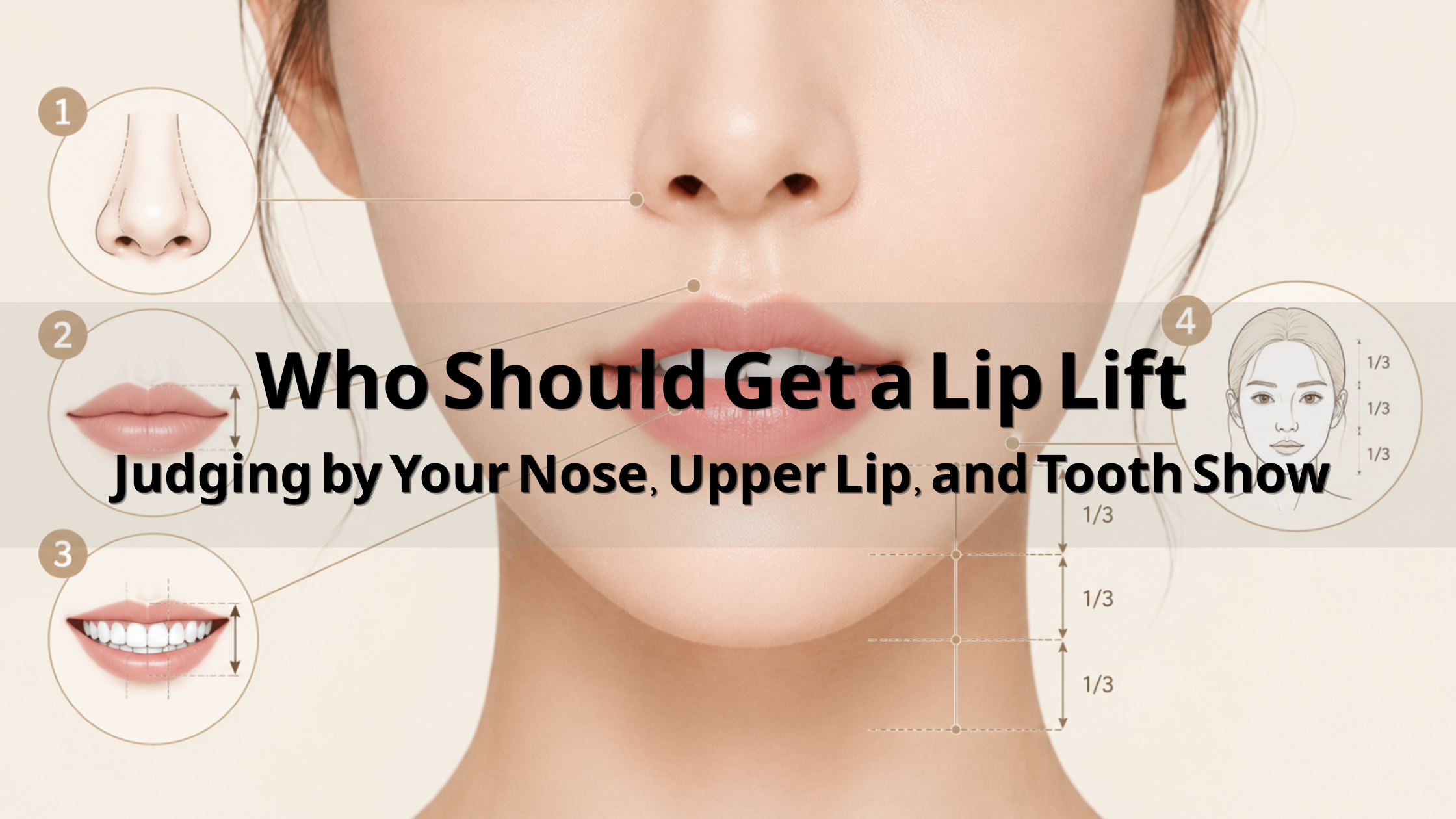
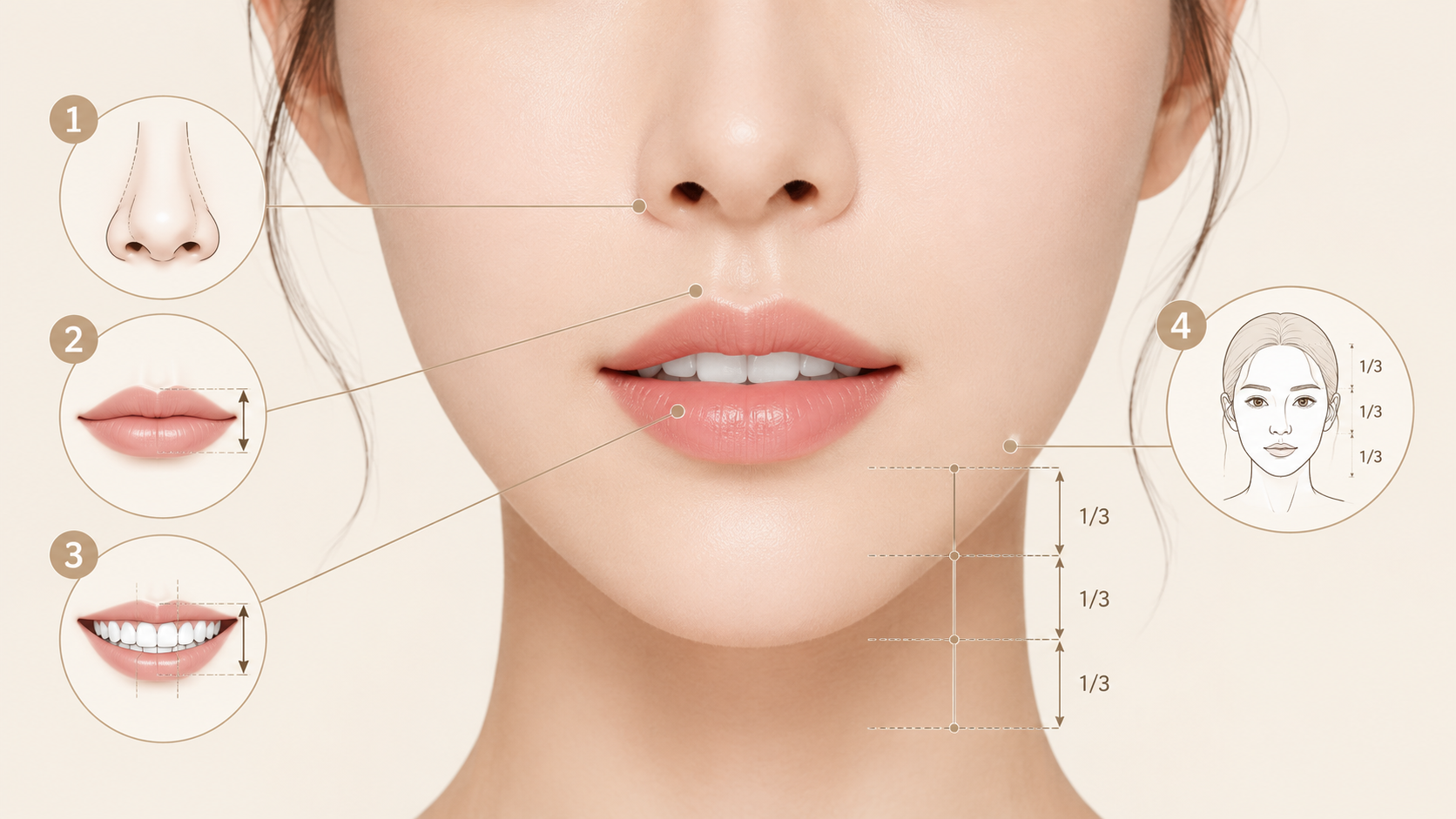
A lip lift (philtrum shortening) is a procedure that removes skin just below the nose to physically shorten the philtrum. For anyone bothered by a long philtrum it is a powerful option, but "my philtrum looks long" does not automatically mean "a lip lift is the answer." Performed on the wrong candidate, it can lead to complaints such as excessive gum or tooth exposure and a disrupted balance with the nose. Suitability for a lip lift should be judged not by philtrum length alone but from four angles: the direction of the nasal tip, the thickness of the upper lip, tooth show at rest, and the proportions of the whole face. This article walks through those four criteria one by one and summarizes who makes a good candidate and who should think twice.
The Short Answer: The Four Criteria at a Glance
You do not need to match every "suits you" sign, but the more caution signs apply, the more we recommend weighing alternatives alongside a lip lift. The sections below cover each criterion in detail.
What a Lip Lift Is
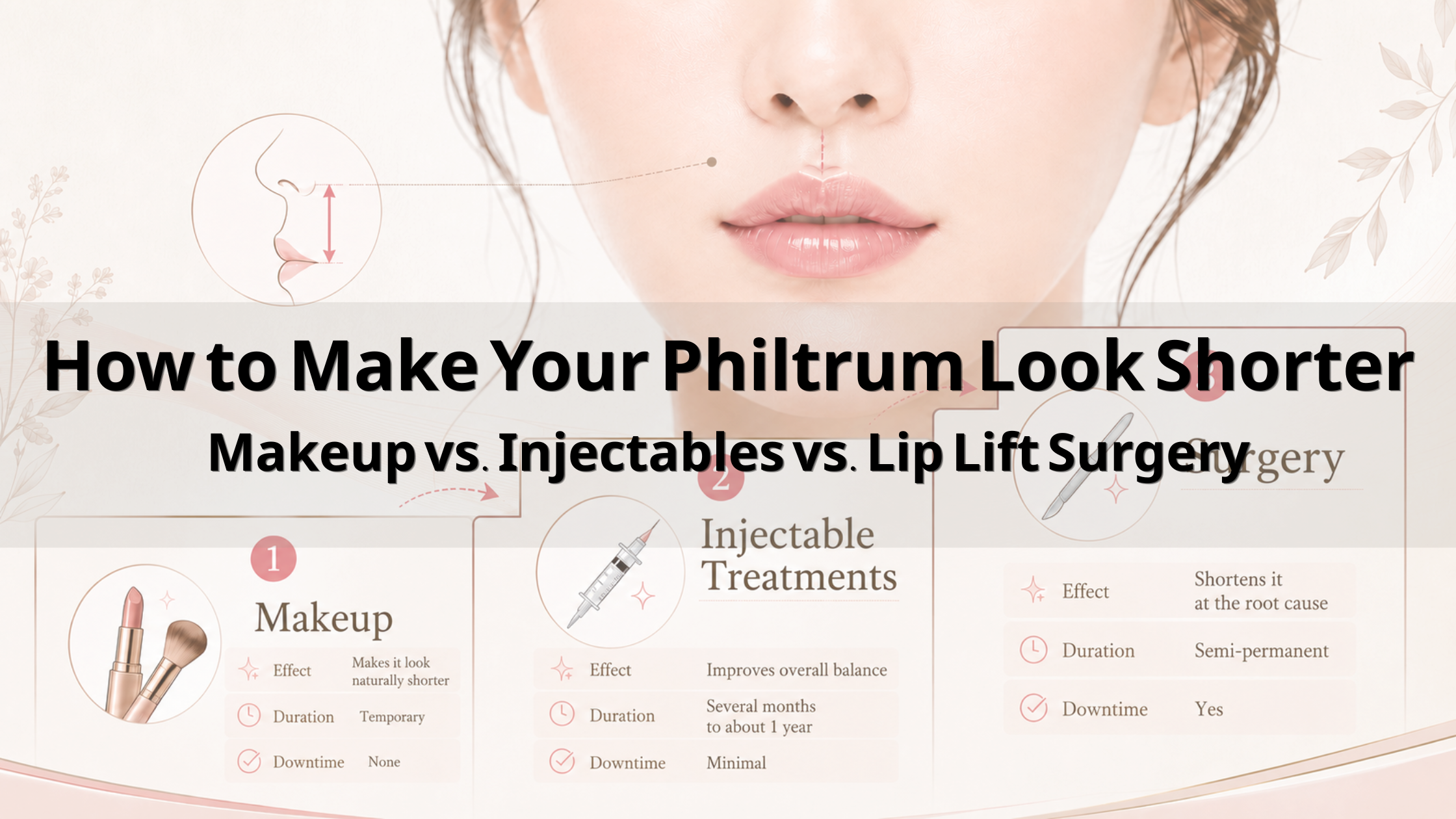
A lip lift removes and sutures skin along the base of the nose (following the columella and the alar bases), shortening the philtrum itself. As the philtrum shortens, the area under the nose looks cleaner, the midface appears tighter, and the upper lip everts slightly upward, giving the mouth a younger look. The effect is clear, but the removed skin cannot be put back, which is exactly why determining in advance whether the philtrum skin is truly long matters more than anything else.
Criterion 1: The Nose. Is the Philtrum Only "Looking" Long?
[Image 2: Nose-cause case diagram]
Concept: two profile illustrations compared; one where a drooping tip and acute nasolabial angle make the philtrum look long, and one where the philtrum skin is genuinely long
alt: diagram of cases where the nasal tip and nasolabial angle make the philtrum look longer
Suggested filename: lip-lift-suitability-nose.jpg
The first thing to check is the nose. When the nasal tip droops downward, or the angle between the columella and the upper lip (the nasolabial angle) is acute, the tip appears to hang over the upper part of the philtrum, making it look longer than it actually is. In that case the cause of the long appearance is not the philtrum skin but the nose, so a lip lift alone is unlikely to deliver the expected change and may even leave the balance with the nose looking less natural.
A simple self-check is to examine your profile in a photo. If your tip points below horizontal, or the space between your tip and upper lip looks cramped, it is worth considering a nose-side approach (correcting the tip and nasolabial angle) before a lip lift.
Criterion 2: The Upper Lip. Thickness and Inward Roll
When skin is removed and the area is sutured upward in a lip lift, the upper lip everts slightly and gains fullness. For someone whose upper lip is thin, or has rolled inward with age, this means a double benefit: a shorter philtrum and an improved lip shape at the same time. These are good candidates.
Conversely, if the upper lip is already full or strongly everted, a lip lift can flip the lip up even further and over-emphasize the mouth. Candidates of this type need a more careful design, such as a conservative amount of skin removal, or a different approach altogether.
Criterion 3: Tooth Show at Rest. How Much of Your Front Teeth Is Visible?
[Image 3: Tooth show comparison diagram]
Concept: three mouth illustrations at rest with the lips slightly parted (no front teeth visible / 2 to 3 mm visible / gums visible), each labeled with its suitability guideline
alt: judging lip lift suitability by upper front tooth show at rest
Suggested filename: lip-lift-suitability-teeth.jpg
This criterion is often overlooked yet extremely important. With the mouth relaxed and slightly open (at rest), a mouth in which the upper front teeth show slightly (roughly 2 to 3 mm as a guideline) is considered an element of a youthful look.
If your front teeth are barely visible at rest, a lip lift can create that appropriate degree of tooth show and bring your mouth closer to a youthful appearance, making you a good candidate. But if your front teeth already show at rest, or your gums show easily when you smile (a gummy-smile tendency), a lip lift can push tooth and gum exposure into excess and create an unnatural impression instead. These are cases where a lip lift is better avoided, or where the excision design must be changed substantially.
Criterion 4: Facial Proportions. Is It Really "Only" the Philtrum That Is Long?
[Image 4: Facial ratio diagram]
Concept: front-facing illustration with guideline markings for the lower-face ratio (nose base to upper lip : lower lip to chin = roughly 1:2)
alt: diagram of the ideal philtrum-to-lower-face ratio of roughly 1 to 2
Suggested filename: lip-lift-suitability-ratio.jpg
The last criterion is the balance of the whole face. Within the lower face, a ratio of roughly 1:2 between the distance from the nose base to the upper lip and the distance from the lower lip to the chin is considered a guideline for harmonious proportions. Philtrum length varies by individual, but if your proportions depart clearly from this ratio with only the under-nose area running long, a lip lift is likely to produce a visible improvement.
On the other hand, if the ratio is actually standard yet the face looks elongated, the cause may lie elsewhere: midface length, or the balance of the nose and chin. Shortening only the philtrum in that state changes one area but can actually unsettle the harmony of the face as a whole. The point is to evaluate the philtrum not in isolation but within the vertical proportions of the entire face.
Good Candidates and Those Who Should Think Twice: A Summary
[Image 5: Suitability checklist]
Concept: two-column checklist image ("good candidates" vs. "those who should proceed with caution"), also reusable for social sharing and saving
alt: checklist of who should and should not get a lip lift
Suggested filename: lip-lift-suitability-checklist.jpg
A lip lift may suit you if: your nasal tip and nasolabial angle are fine yet your philtrum is long; your upper lip is thin or rolled inward; your upper front teeth are barely visible at rest; the area under your nose is clearly long relative to the lower-face ratio (roughly 1:2); or you feel your philtrum has lengthened with age.
Think twice or proceed with caution if: the main reason your philtrum looks long lies with the nose (a drooping tip, an acute nasolabial angle); your upper lip is already full or strongly everted; your front teeth already show at rest, or your gums show easily; your philtrum length is actually standard; or you scar easily and are strongly concerned about a scar beneath the nose.
Many people find their answers split between the two columns. The final call should be made through an examination in which the nose, upper lip, teeth, and overall facial proportions are evaluated together.
Frequently Asked Questions
Q1. How many millimeters counts as a "long" philtrum?
A. As a general guideline, philtrum length is around 11 to 13 mm in women and slightly longer in men, and beyond roughly 15 mm it tends to read as long. Suitability, however, is not decided by the number alone; it depends on the interplay with the nose, upper lip, tooth show, and overall facial proportions. Treat the figures as reference points and prioritize a comprehensive evaluation at an examination.
Q2. Will the lip lift scar be noticeable?
A. The incision follows the base of the nose, so the scar sits where the shadow of the nose easily conceals it. Some redness is normal for a while after surgery and generally settles over time. Scar healing does vary by individual, though, and some skin types scar more visibly, so if scarring worries you, discuss it with your surgeon in advance.
Q3. Can it be reversed once done?
A. Removed skin cannot be put back. That is precisely why it is essential to determine beforehand whether the philtrum skin is truly long and whether the cause might actually lie with the nose. If you are unsure, consider a conservative excision design, or evaluate a nose-side approach first, and make your decision with the irreversibility in mind.
Conclusion: Don't Decide on Philtrum Length Alone
Whether a lip lift suits you is judged not by philtrum length as a single measure but by four criteria taken together: the nasal tip and nasolabial angle, upper lip thickness, tooth show at rest, and the proportions of the whole face. In particular, when the cause lies with the nose, or when tooth show is already sufficient, a lip lift may be better avoided or another approach may fit better. Because the removed skin cannot be restored, do not stop at a self-check: confirm your suitability through an examination before you decide.
 Google Maps